Understanding the Spirit of the French Cancan
Before learning the steps, it is essential to understand the spirit of the Cancan. This dance is built on freedom, energy and the joy of performance. Smile, presence and engagement are just as important as technique. The Cancan is not only a sequence of movements, it is a way of occupying the space, interacting with the audience and expressing collective energy. At Paradis Latin, this spirit remains at the heart of every performance.
Working on Flexibility and Warm Up
The French Cancan strongly engages the legs, hips and core. A proper warm up is essential to prevent injuries. Stretching the hamstrings, mobilising the hips and strengthening the core help prepare the body. Flexibility is particularly important for the high kicks that define the Cancan. The better prepared the body is, the more fluid and controlled the movements will be.
Learning the Basic Movements
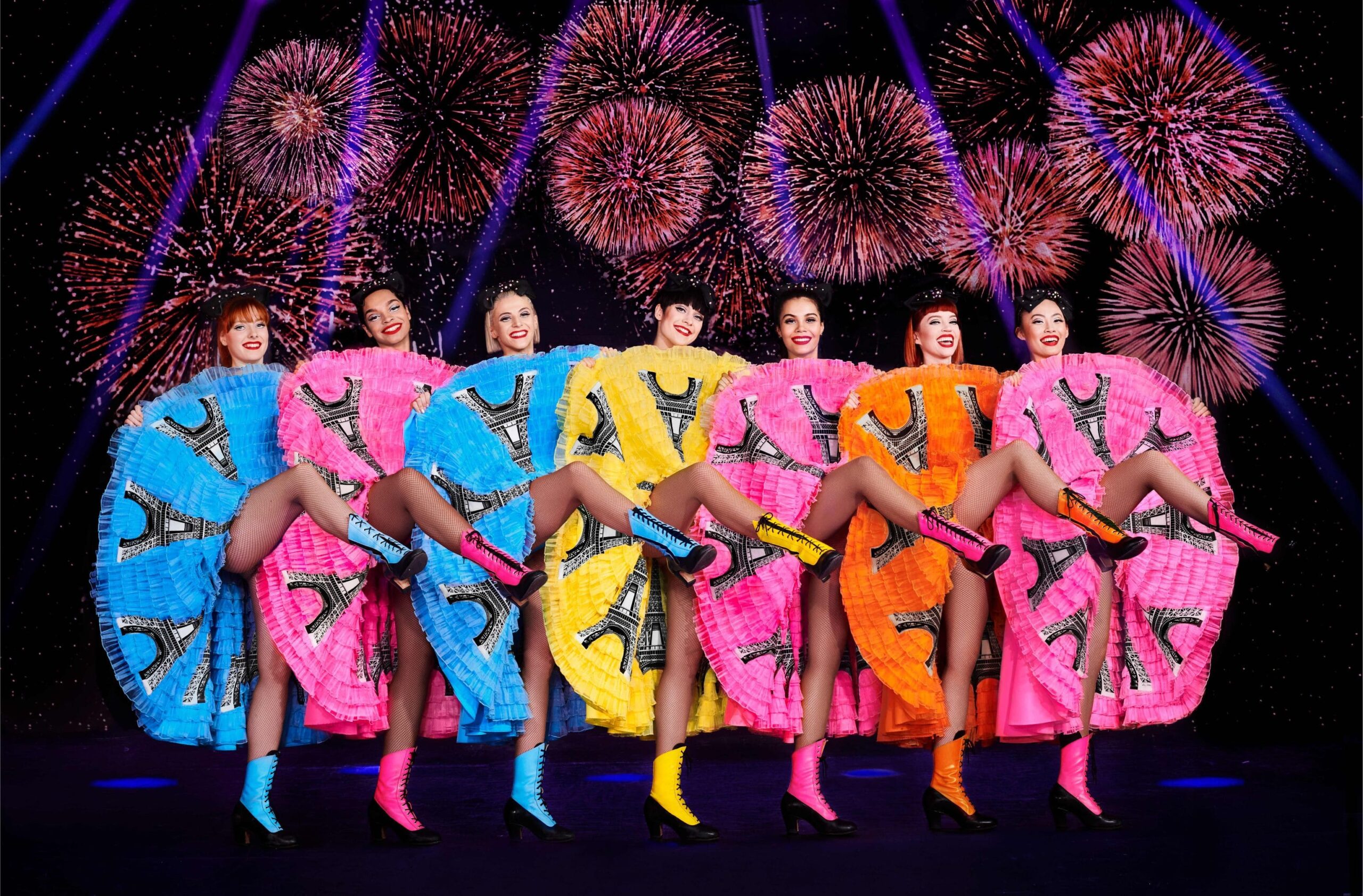
The first steps of the French Cancan are based on a few iconic movements. The high kick involves lifting the leg dynamically while maintaining balance. Alternating kicks create rhythm and coordination between both legs. Small jumps and rebounds add energy to the sequence. Arm movements and the use of the skirt also play a key role in amplifying the visual effect and structuring the choreography. These basics allow beginners to gradually build a more complete routine.
Developing Rhythm and Coordination
The Cancan is a highly rhythmic group dance. Practicing with music is essential to internalise timing and synchronise movements. Counting beats, starting slowly and then increasing speed helps improve coordination. Precision is key, as each movement must fit within a larger dynamic. Even when practicing alone, working with rhythm helps recreate the spirit of cabaret performance.
Building Endurance and Energy
The French Cancan is physically intense. Fast sequences, jumps and kicks place significant demands on the cardiovascular system. To improve, it is helpful to include endurance training such as running, strength exercises or interval training. The goal is to maintain a consistent level of energy throughout the choreography. At Paradis Latin, dancers perform multiple sequences with remarkable intensity, highlighting the demanding nature of this discipline.
Embracing Stage Presence
Beyond technique, the Cancan is about attitude. Looking forward, smiling, engaging with the audience and fully committing to each movement are essential elements. Even as a beginner, it is important to express yourself and not limit the dance to mechanical execution. Cabaret is an art of connection, expression and generosity.
Learning from Professional Performers
Watching professional dancers is one of the best ways to improve. Shows at Paradis Latin demonstrate the precision, synchronisation and energy required for a high level Cancan performance. By observing these performances, beginners can refine their posture, timing and stage presence.
An Accessible Yet Demanding Dance
The French Cancan may seem intimidating, but its basics are accessible with practice. It requires discipline, consistency and commitment. By progressively working on movements, rhythm and energy, anyone can discover the joy of this unique dance. The Cancan embodies the spirit of Parisian cabaret, combining technical precision with freedom of expression, making it both a physical and joyful experience.