Nearly a century of eclipse before July 14th became a national holiday
One year after the storming of the Bastille, on 14 July 1790, the Fête de la Fédération brought together nearly 300,000 people at the Champ-de-Mars around a promise of unity. The celebration was spectacular — but short-lived. From 1804, Napoleon Bonaparte abolished it in favour of the Saint-Napoleon, celebrated on 15 August.
 The Restoration followed, celebrating the Saint-Louis on 25 August, then the Saint-Charles under Charles X. The July Monarchy, the Second Empire — every successive regime carefully avoided 14 July. The reason was simple: honouring that date would mean acknowledging the legitimacy of the Revolution, and thus undermining their own power. For nearly a century, 14 July remained a whispered memory, kept alive only by republicans.
The law of 6 July 1880: a compromise that became France’s national holiday
Everything changed with the consolidation of the Third Republic. La Marseillaise had just been elevated to the status of national anthem. All that was missing was a national holiday. The Paris deputy Benjamin Raspail put forward a bill, adopted almost unanimously a few weeks later. Promulgated on 6 July 1880 by President Jules Grévy, it was contained in a single sentence: “The Republic adopts 14 July as an annual national holiday.”
The genius of this text lies in its silence. It does not specify which 14 July is being celebrated — and that choice was deliberate. The date carries two memories in one: that of 1789, the victory of the Parisian people, and that of 1790, the more peaceful Fête de la Fédération. This dual reading allowed the Republic to unite, under a single date, its most ardent supporters and its moderates. And so France’s national holiday was born — known the world over as Bastille Day.
The first celebration of 14 July in 1880 — already spectacular
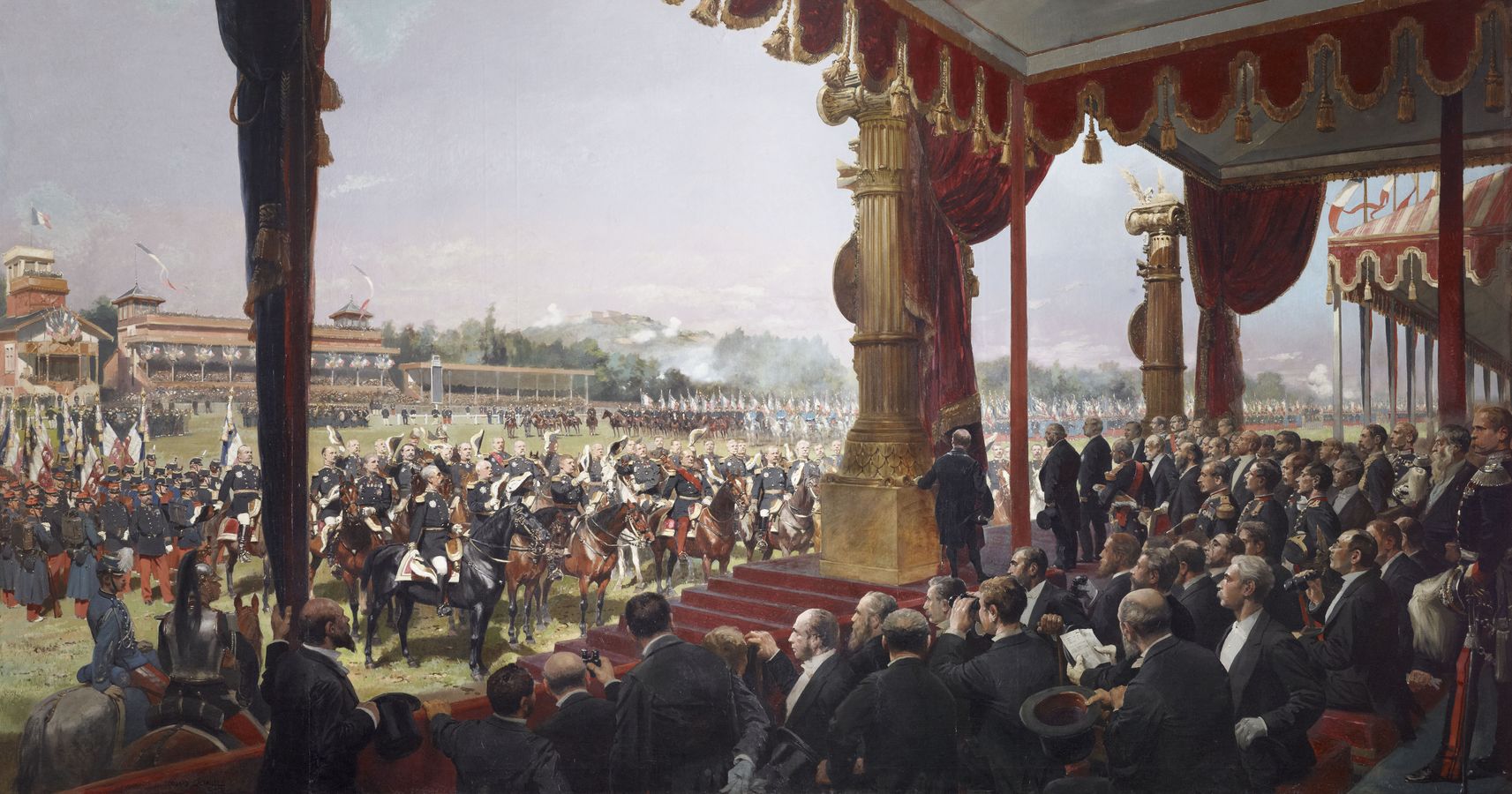
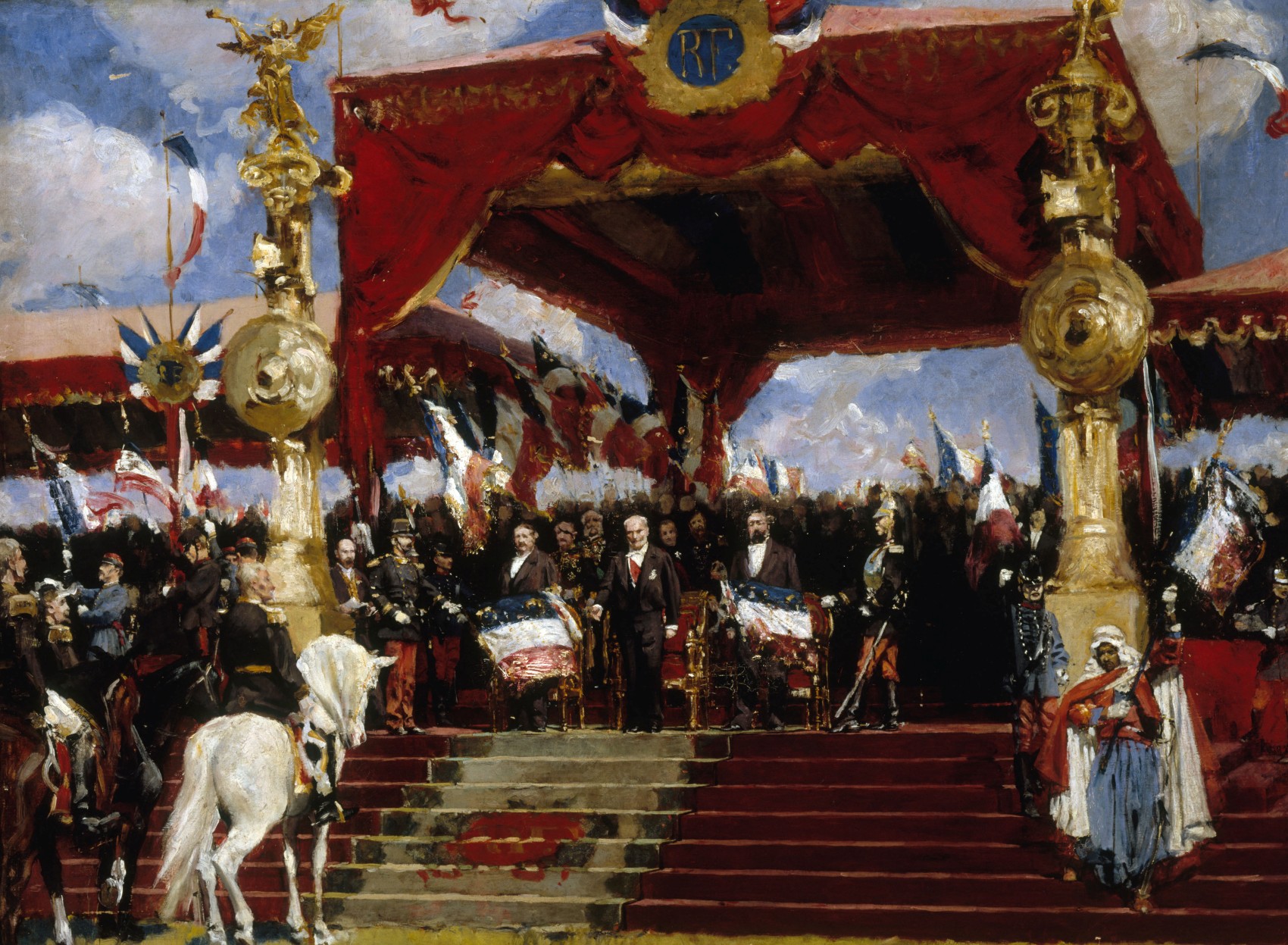
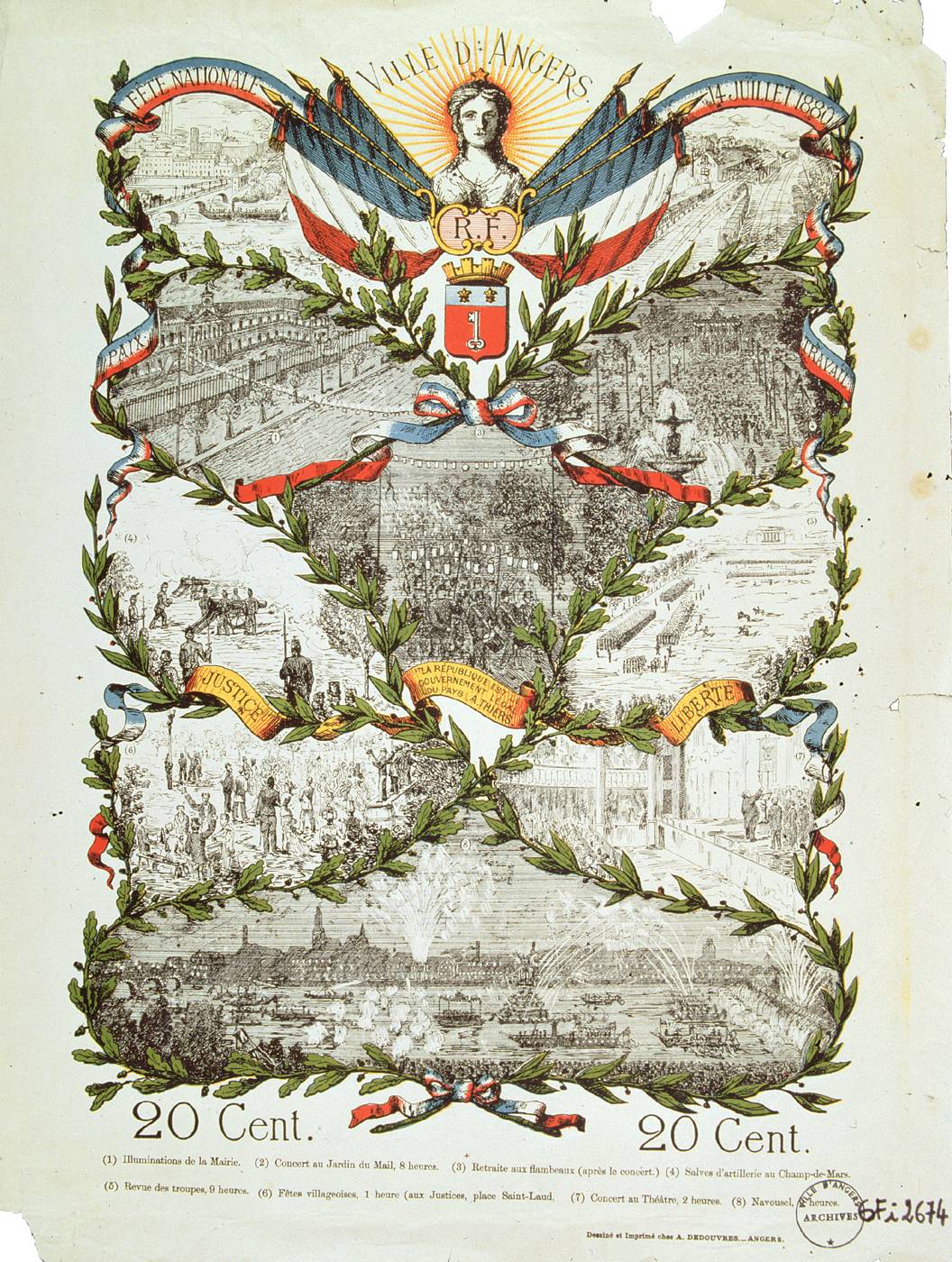 On 14 July 1880, France discovered its national holiday. The programme was ambitious: concerts in the gardens, decorated streets, fireworks, dances in every commune. But it was at the Longchamp racecourse that the most memorable scene unfolded.
Before 300,000 spectators, Jules Grévy solemnly presented new flags to the army, flanked by Léon Gambetta and Léon Say. From this very first edition, the Republic laid the foundations of its rituals: military parade, fireworks, popular dances — three pillars of the Bastille Day celebrations in Paris that endure to this day.
From Longchamp to the Champs-Élysées: the evolution of Bastille Day celebrations in Paris
The military parade moved to the Champs-Élysées in 1919, in tribute to the soldiers of the Great War. It would alternate between several Parisian avenues before settling permanently on the world’s most beautiful avenue in 1980. As night falls, the other face of Bastille Day takes over: the bals populaires. In village squares, beneath the fairy lights of Parisian neighbourhoods, people dance to the sound of accordions and ballroom orchestras. It is in this spirit that, in 1937 at the Montmartre barracks, the now-iconic tradition of the Bal des Pompiers was born — one of the most beloved symbols of Bastille Day in Paris.
Paradis Latin and the Republic: two parallel histories
When the Republic adopted 14 July in 1880, Paradis Latin had not yet reopened its doors. It would take until January 1889, and the hand of Gustave Eiffel, for it to be reborn as a cabaret for the Universal Exhibition celebrating the centenary of the Revolution. The two stories unfold in the same era — beneath the gilded splendour of the Belle Époque, when the Republic invented its own way of bringing the French together through celebration, dancing, spectacle and Champagne. It is this spirit that Paradis Latin honours this year with an exceptional evening on the Seine, facing the Eiffel Tower for the fireworks display. A first for Paradis Latin — celebrating Bastille Day in a manner worthy of its brilliance.
Experience the finest Bastille Day evening in Paris
This year, Paradis Latin reimagines the Bastille Day celebration in Paris. For the first time, the oldest cabaret in the capital is orchestrating an exceptional Bastille Day evening on the Seine, combining the elegance of a Bastille Day Dinner in Paris with the spectacle of a gala cruise facing the Eiffel Tower. A unique way to celebrate Bastille Day — where heritage, gastronomy and Parisian magic come together.